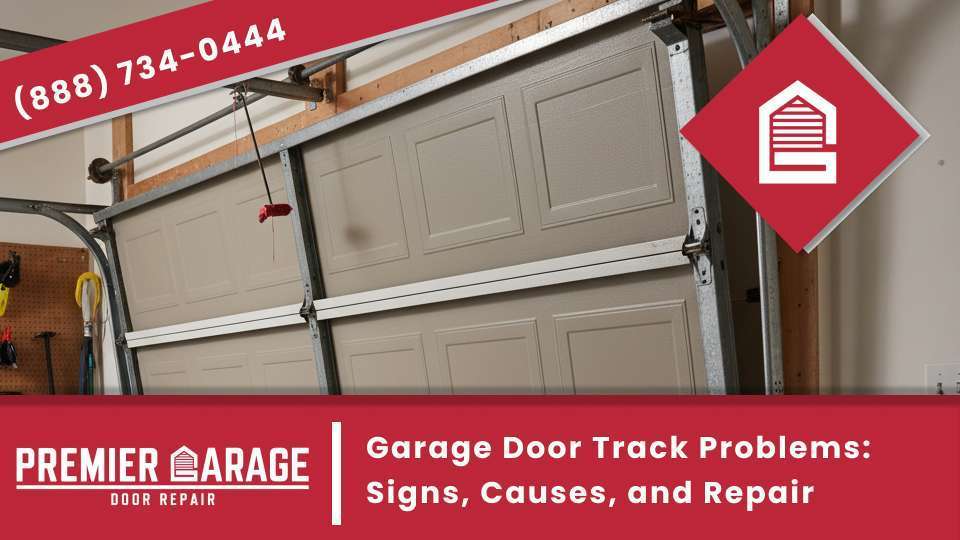
Garage door track problems cause grinding, binding, and dangerous situations where your door jams or derails during operation. Identifying garage door track issues early prevents rollers from jumping out of the track and your door from becoming stuck in an unsafe position. A bent garage door track narrows the channel that rollers travel through and creates resistance at every point of contact. Furthermore, a damaged garage door track from impacts or settling can cause the door to operate unevenly and strain your opener motor. Garage door track alignment ensures both vertical and horizontal sections guide rollers smoothly without friction or binding. In addition, knowing how to align garage door tracks helps you understand what is involved when a technician corrects the problem. Garage door track repair restores the smooth travel path that your rollers depend on for every open and close cycle.
Likewise, knowing how to fix a garage door track helps you evaluate whether straightening, partial replacement, or full track replacement is the right solution. If your door scrapes, has a bent garage door track, binds, or moves unevenly, search for garage door track problems near you to get professional help fast.
How Garage Door Tracks Function
Garage door tracks create the guided path that controls your door’s movement from closed to fully open. Specifically, understanding track function helps you recognize when garage door track problems are developing like a bent garage door track.
Here is how the track system works:
- Vertical tracks on each side guide the door upward from the floor
- Curved sections bend the door’s path from vertical to horizontal travel
- Horizontal tracks along the ceiling hold the door in the open position
- Each roller rides inside the track channel carrying a share of the door’s weight
- Track brackets secure the tracks to the door frame, wall, and ceiling
- Consistent spacing between the roller and track wall ensures friction-free travel
In geo-location, Because the curved section handles the highest stress as the door transitions direction, this area is where most garage door track issues originate. Therefore, inspecting the curved section first saves diagnostic time when troubleshooting binding problems.
Signs of Garage Door Track Problems
Garage door track issues produce clear warning signs that homeowners can identify during normal operation. Furthermore, catching these signs early prevents complete derailment.
Here are the most common signs of garage door track problems:
- Grinding or scraping sounds at specific points during travel
- Also, the door hesitates, sticks, or jerks at the same spot every cycle
- Furthermore, visible gaps between rollers and the track wall
- One side of the door moves faster or higher than the other
- Additionally, the door shakes or vibrates excessively during operation
- Metal shavings or debris on the floor below the tracks
- Rollers that have partially or fully jumped out of the track
- Finally, the door does not seal flush against the floor on one or both sides
A bent garage door track typically creates a problem at the same point during every cycle. Consequently, consistent binding at a specific location strongly indicates physical track damage at that spot.
Common Causes of Garage Door Track Problems
Several factors cause garage door track issues. Specifically, understanding these causes helps you prevent damage and address problems early.
Impact from vehicles or objects Bumping the track with a car, ladder, or heavy item bends the metal inward and restricts roller movement. Furthermore, a damaged garage door track from impact is the most common cause of sudden track problems. In addition, even a small dent in the track catches rollers during every pass.
Loose mounting brackets Vibration from thousands of open and close cycles loosens the bolts that hold tracks to the frame and ceiling. Consequently, shifted tracks misalign with rollers creating uneven travel. Furthermore, one loose bracket can affect the entire track run on that side of the door.
Worn or damaged rollers Rollers with flat spots or broken bearings grind against track walls and create wear grooves. As a result, the track channel widens unevenly and rollers travel inconsistently. In addition, damaged rollers accelerate track deterioration.
Foundation and frame settling Home settling shifts the door frame which moves the tracks out of their original alignment. Furthermore, settling causes gradual changes that worsen over years. Moreover, garage door track alignment problems from settling are common on older homes.
Debris in the tracks Dirt, leaves, small rocks, and insect nests inside the tracks obstruct roller movement. Consequently, rollers force through debris and can jump the track entirely if the obstruction is large enough.
Garage Door Track Alignment and Repair
Garage door track alignment restores proper roller travel and eliminates binding. Furthermore, garage door track repair options range from simple straightening to full replacement.
Track alignment adjustment A technician loosens the bracket bolts, repositions the track until rollers travel without contacting the walls, and retightens everything. Furthermore, knowing how to align garage door tracks involves checking plumb on vertical sections and verifying proper angle on horizontal sections. In addition, alignment costs between 75 and 200 dollars for professional service.
Bend straightening Minor bends can be straightened with specialized tools to restore the track channel width. However, kinked or creased metal cannot be straightened effectively and needs replacement. Furthermore, knowing how to fix a garage door track bend requires evaluating whether the metal can be restored without weakening it.
Section replacement Severely damaged sections of track can be replaced individually without replacing the entire system. Furthermore, the curved section is the most commonly replaced piece because it handles the most stress. In addition, section replacement costs between 100 and 300 dollars per side.
Full track replacement When both tracks have multiple problem areas or are badly damaged, full replacement delivers the most reliable result. Furthermore, complete track replacement costs between 200 and 500 dollars for both sides including hardware and labor.
Track cleaning Sometimes binding results from debris rather than physical damage. Consequently, wiping the tracks clean with a damp cloth and inspecting for obstructions resolves some problems without structural repair.
How to Prevent Garage Door Track Problems
Preventing track damage extends the life of your rollers, opener, and entire door system. Furthermore, most garage door track problems are preventable with basic awareness and maintenance.
Here are effective ways to prevent garage door track problems:
- Keep vehicles, bicycles, and stored items away from the track path
- Also, visually inspect tracks monthly for debris, bends, or loose brackets
- Furthermore, wipe the inside of the tracks with a damp cloth quarterly
- Tighten track bracket bolts annually as vibration loosens them over time
- Additionally, replace worn rollers before they damage the track surface
- Never hang items from the horizontal tracks or use them as storage supports
- Finally, schedule annual professional maintenance that includes track inspection
These preventive steps take minutes but prevent the binding, derailment, and opener strain that damaged tracks create.
When to Call a Professional
Some track problems require professional tools and expertise. Therefore, contact a technician for garage door track problems near you if any of the following apply:
- A roller has jumped completely out of the track
- The door is stuck and will not move in either direction
- Visible bends or damage exist in the track metal
- The door travels unevenly despite lubricated rollers
- Brackets are loose or pulling away from the frame
- The door does not close flush on one or both sides
A garage door track problems expert near you inspects the tracks, rollers, and brackets to identify every issue. Specifically, they straighten or replace damaged sections, realign the system, and test the door through multiple cycles. In addition, they check rollers and hinges for damage caused by the track problem.
Do not force a door through a damaged track because continued operation causes derailment. Instead, call today to schedule your track inspection and restore safe smooth operation.
Phone: (888) 734-0444
Email: info@premiergaragerepair.net
Website: https://www.premiergaragerepair.net/