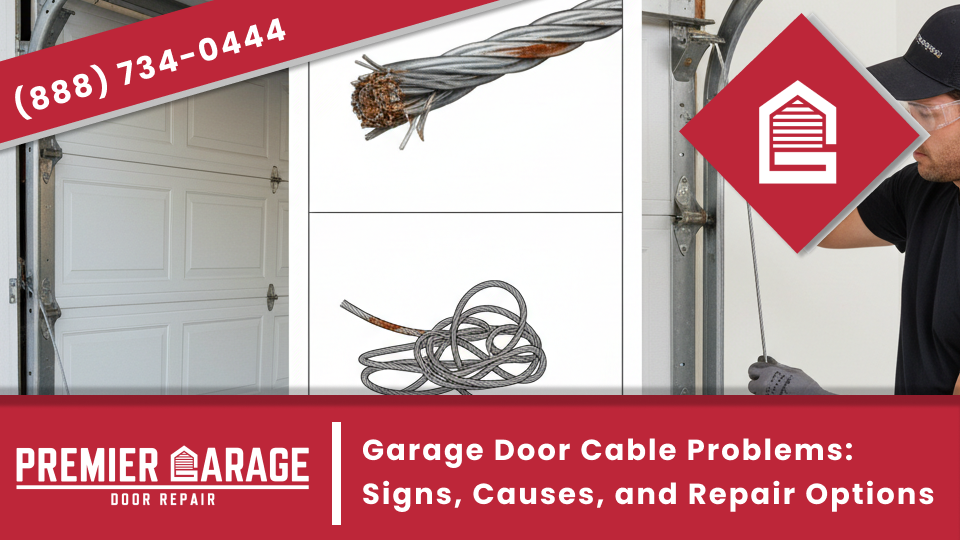
In many cases, garage door cable damage progresses gradually as the door continues to operate under increasing strain. Each time the door opens or closes, worn cables rub against drums, tracks, and brackets, slowly weakening individual strands of steel. Because the system is designed to work as a unit, even slight cable deterioration forces other components to compensate. Springs may stretch unevenly, rollers can bind inside the tracks, and the opener may be forced to pull more weight than intended. These changes often go unnoticed at first, especially if the door still appears to function, but the stress compounds with every cycle.
What Factors Play a Role?
Environmental factors also play a major role in cable failure. Garages are frequently exposed to moisture, temperature fluctuations, and airborne debris, all of which accelerate corrosion and metal fatigue. Rusted cables lose flexibility and strength, making them far more likely to snap under load. Homes near coastal areas or regions with high humidity often experience cable problems sooner than expected, particularly when routine inspections are skipped. Over time, this hidden deterioration increases the likelihood of sudden system failure without warning.
What makes garage door cable problems especially dangerous is how quickly conditions can change once a cable reaches its breaking point. A door that operated normally one day may become unstable the next, dropping unexpectedly or pulling itself off balance. This unpredictability puts homeowners, vehicles, and nearby structures at risk. Addressing early warning signs before complete failure occurs allows repairs to remain controlled and preventative rather than reactive. Understanding these risks reinforces why professional assessment and timely service are essential for maintaining both safety and long-term garage door reliability.
What Garage Door Cables Do and Why They Matter
Garage door cables are responsible for supporting and stabilizing the door as it opens and closes or else if bad, the Garage door cable snapped. These steel cables are attached to the bottom brackets of the door and wind around drums near the top of the system. As the door moves, the cables work in tandem with the springs to evenly distribute weight and control movement. When cables are in good condition, the door lifts smoothly and stays level throughout operation. When garage door cable problems begin, that balance is disrupted, placing excessive strain on other components such as springs, rollers, tracks, and the opener.Common Garage Door Cable Problems Homeowners Face
Garage door cable issues can appear in several forms, each with its own risks. Some of the most common problems include:- Frayed or worn cables caused by age and friction
- Cables slipping off the drum
- A garage door cable snapped entirely
- Rusted or corroded cables weakening over time
- Uneven cable tension causing the door to lift crooked
Warning Signs of a Broken Garage Door Cable
Homeowners often notice symptoms before realizing the cables are the source of the problem. Common warning signs include:- The garage door lifting unevenly or at an angle
- One side of the door hanging lower than the other
- Visible fraying or loose cables near the tracks
- Loud snapping or grinding noises during operation
- A door that suddenly slams shut or won’t open fully
What Causes Garage Door Cables to Fail
Garage door cable problems rarely happen overnight. They usually develop due to a combination of wear, environmental exposure, and system imbalance. Key causes include:- Normal wear from repeated use
- Moisture exposure leading to rust and corrosion
- Improper installation or poor-quality cables
- Operating the door with damaged or aging springs
- Lack of routine maintenance and inspection
Why Operating a Door With Cable Issues Is Dangerous
Continuing to use a garage door with damaged cables puts the entire system at risk. As cables deteriorate, the door becomes harder to control, increasing the chance of sudden drops or derailment.Potential dangers include:- Injury to people or pets beneath the door
- Damage to vehicles or stored belongings
- Track bending or roller damage
- Opener strain leading to motor failure
Why Garage Door Cable Repair Is Not a DIY Job
Garage door cables are under extreme tension. Attempting repairs without proper tools and training can result in serious injury. Unlike simple maintenance tasks, cable replacement requires precise tensioning and system balancing.DIY attempts often lead to:- Improper cable alignment
- Increased spring stress
- Repeat failures
- Voided warranties