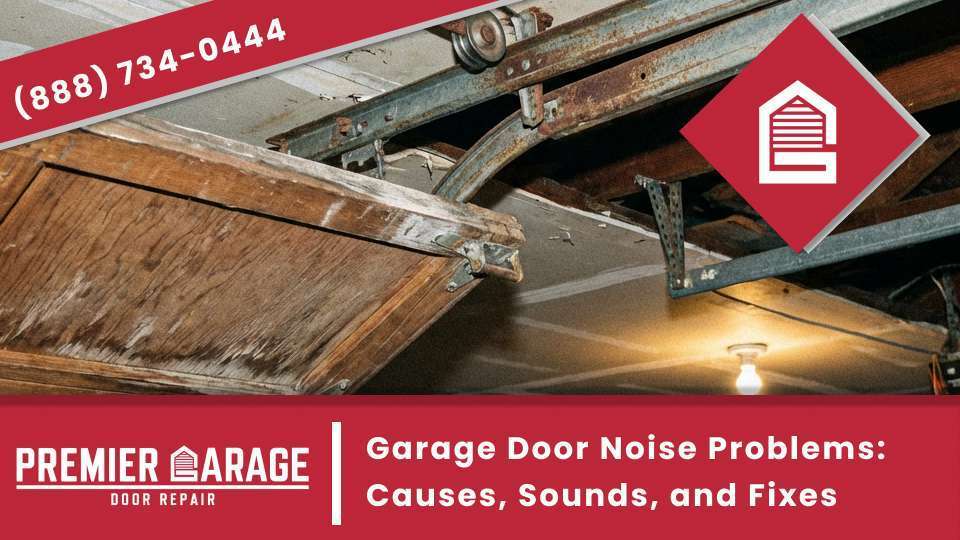
Garage door noise problems are one of the most common reasons homeowners call for a service visit — and for good reason. A noisy garage door is never just an annoyance; every squeak, grind, bang, and rattle is a signal that something specific is wrong. Whether you’re hearing a garage door grinding noise every time you open it, dealing with persistent garage door squeaking that won’t go away after lubrication, or you’ve been startled by a sudden garage door banging noise that shook the walls, this guide explains exactly what each sound means. More importantly, it walks you through how to fix a noisy garage door yourself when the repair is safe — and when the smarter move is calling a professional to quiet a noisy garage door for good.
Why Garage Door Noise Problems Deserve Immediate Attention
Most homeowners tolerate a noisy garage door longer than they should, assuming the sound is harmless. In reality, garage door noise problems are almost always the early warning stage of a mechanical failure. A garage door grinding noise means metal components are wearing against each other. Garage door squeaking points to dry or corroded hardware. A garage door banging noise often signals a component under dangerous spring tension that is close to failure. The longer noise goes unaddressed, the more wear accumulates — and the more expensive the eventual repair becomes.
Understanding what sound corresponds to what problem is the fastest way to diagnose garage door noise problems accurately and decide on the right course of action.
Garage Door Grinding Noise: Causes and Fixes
A garage door grinding noise is one of the most serious sounds your door can make. It almost always means metal-on-metal contact is occurring somewhere in the system — a situation that wears components down with every cycle.
Most common causes of a garage door making a grinding sound
- Worn or dry rollers. Steel rollers without ball bearings grind as they travel along the track. Even ball-bearing rollers will begin making a garage door grinding noise once the bearings wear out or the rollers go dry. Nylon rollers are significantly quieter and are the preferred upgrade for homeowners dealing with chronic grinding noise problems.
- Debris in the tracks. Small rocks, grit, and compacted dirt inside the track create a grinding sound as the rollers push through them. Cleaning and inspecting the tracks regularly eliminates this cause entirely.
- Loose or misaligned track. When a track section shifts even slightly out of alignment, the rollers fight the track instead of rolling smoothly through it. This creates both a garage door grinding noise and increased wear on the rollers and hinges simultaneously.
- Worn opener drive gear. Chain-drive and screw-drive openers have internal gears that wear down over time. A grinding noise that seems to come from the opener unit itself — rather than the door — usually points to a stripped or failing drive gear inside the motor housing.
How to fix a garage door grinding noise
Start by cleaning the tracks thoroughly and applying a garage-door-specific lubricant to the rollers, hinges, and springs. If the grinding persists, inspect the rollers for flat spots or worn bearings. Replacing steel rollers with nylon ball-bearing rollers is one of the most effective fixes for chronic garage door grinding noise and typically costs $75–$150 in parts and labor. If the noise is coming from the opener unit, that requires a professional assessment — gear replacement inside an opener unit is not a safe DIY task.
Garage Door Squeaking: Causes and Fixes
Garage door squeaking is the most common of all garage door noise problems, and in many cases, it is also the easiest to fix. A squeaky garage door is almost always caused by dry or corroded hardware that needs lubrication — but when lubrication doesn’t solve it, the cause runs deeper.
What causes garage door squeaking
- Dry hinges. Hinges that haven’t been lubricated create a squeak as they flex with each panel movement. This is the most frequent cause of garage door squeaking in residential doors.
- Dry or corroded springs. Torsion and extension springs rub against their mounting hardware as they wind and unwind. Without lubrication, that friction produces a persistent squeaky garage door sound that gets worse in cold or humid conditions.
- Worn roller bearings. As roller bearings wear out, they lose their ability to rotate smoothly, creating a high-pitched squeak or screech as the door travels up and down.
- Loose hardware vibrating. Bolts and brackets that have worked loose vibrate as the door moves, producing a rattling squeak that can be hard to pinpoint.
How to fix garage door squeaking
The first step is always lubrication. Use a lithium-based spray or silicone lubricant on all hinges, springs, roller stems, and the top of the torsion bar. Avoid WD-40 — it is a solvent, not a lubricant, and attracts grit that accelerates wear. If garage door squeaking continues after lubrication, tighten all visible bolts and brackets. If the squeak persists, the rollers or hinges likely need replacement. A professional can identify the exact source of a squeaky garage door in minutes during a standard service visit.
Lubricate all moving parts — hinges, springs, rollers, and the torsion bar — every six months. This single habit prevents the majority of garage door squeaking and grinding noise problems before they start.
Garage Door Banging Noise: Causes and Fixes
A garage door banging noise is the most alarming of all garage door noise problems, and for good reason — it often signals a component failure rather than simple wear. Unlike squeaking or grinding, a garage door banging noise should prompt you to stop using the door immediately and inspect before continuing.
What causes a garage door loud bang
- A broken spring. The single most common cause of a sudden, explosive garage door loud bang is a torsion or extension spring snapping under tension. The sound is often compared to a gunshot. If you hear this while the door is closed or idle, do not attempt to open the door — inspect the springs from a safe distance first.
- A snapped cable. Lift cables under tension will snap with a loud bang when they fray and break. A snapped cable usually causes the door to drop on one side, creating both the garage door banging noise and a visible sag in the door.
- The door hitting the floor too hard. If the opener’s closing force is set too high, or if the travel limit is miscalibrated, the door slams into the ground at the end of its travel. This produces a repetitive banging noise with every close cycle and puts serious stress on the bottom panel and weatherstrip.
- Loose panels rattling at speed. Panels with worn or missing hinges can flap and bang against each other as the door accelerates and decelerates through the track curve.
How to fix a garage door banging noise
If the banging is a one-time event and the door won’t open or is sagging, assume a broken spring or cable and call a professional immediately. These are high-tension components that cannot be safely repaired without proper tools and training. If the banging happens every time the door closes and appears to be the door hitting the floor, the opener’s closing force and travel limits can often be adjusted through the opener’s settings panel — consult your opener manual or have a technician calibrate it during a service visit.
Never attempt to repair a broken spring or snapped cable yourself. These components store hundreds of foot-pounds of energy and can cause severe injury if released incorrectly. This is always a professional repair.
Other Common Garage Door Noise Problems
Rattling
A rattling noisy garage door is almost always caused by loose hardware — bolts, brackets, track fasteners, or the opener chain. Tighten every visible bolt on the tracks, hinges, and opener rail. A loose chain on a chain-drive opener creates a loud slapping rattle that can be corrected by adjusting the chain tension per the opener’s manual.
Popping or cracking
Popping sounds during operation usually come from the springs coiling and uncoiling under tension, or from panels expanding and contracting with temperature changes. Light spring lubrication typically eliminates the popping. Persistent cracking from the panels themselves may indicate stress fractures and warrants a professional inspection.
Vibration and humming
A humming or vibrating noisy garage door is often the opener motor transferring vibration through the ceiling mount. Anti-vibration pads installed between the opener bracket and the ceiling joists can dramatically reduce this. If the hum is loud and accompanied by slow movement, the opener motor may be struggling and nearing the end of its service life.
How to Fix a Noisy Garage Door: Step-by-Step
To quiet a noisy garage door, work through these steps in order before calling for service — many homeowners resolve the problem entirely on their own.
- Tighten all hardware. Go over every bolt, nut, and bracket on the tracks, hinges, and opener rail with a socket wrench. Loose hardware is behind a large percentage of garage door noise problems.
- Lubricate all moving parts. Apply lithium or silicone spray to hinges, springs, roller stems, and the torsion bar. Do not lubricate the tracks themselves — only the components that roll or flex inside them.
- Inspect and replace rollers. If rollers are visibly worn, cracked, or have flat spots, replace them. Upgrading to nylon ball-bearing rollers is the single most effective way to fix a noisy garage door long-term.
- Check track alignment. Hold a level against each vertical track section. A track that is more than ¼ inch out of plumb needs professional realignment.
- Inspect springs and cables. Look for gaps in the torsion spring coil, fraying on the cables, or any visible damage. Do not attempt to adjust or repair these yourself — call a professional.
- Adjust the opener settings. If the door is slamming closed, consult your opener manual to reduce closing force or adjust the travel limit downward.
When to Call a Professional
Knowing how to fix a noisy garage door yourself is valuable — but knowing when to stop and call a professional is equally important. In geo-location, Contact a technician if:
- You hear a sudden garage door banging noise and the door won’t open normally
- The garage door grinding noise continues after cleaning, lubrication, and roller replacement
- Garage door squeaking persists after full lubrication and hardware tightening
- The door moves unevenly, sags on one side, or jerks through its travel
- Any spring or cable hardware appears damaged, stretched, or broken
A professional technician can diagnose and resolve the full range of garage door noise problems in a single visit — and catch the components that are close to failure before they cause more serious damage.
Stop Problems before they get worse
Garage door noise problems are not something to tune out. Whether it’s a garage door grinding noise wearing down your rollers, garage door squeaking that signals dry hardware, a garage door banging noise pointing to a broken spring, or general rattling from loose hardware — every sound has a cause, and every cause has a fix. The sooner you act, the less expensive and disruptive the repair will be.
If you’re ready to quiet a noisy garage door and want the job done right the first time, Premier Garage Repair is here to help. Contact us today to schedule a diagnostic visit and get your garage door running quietly and safely again.
Phone: (888) 734-0444
Email: info@premiergaragerepair.net
Website: https://www.premiergaragerepair.net/