Protecting Your Garage Door from Heat, Cold, Moisture, and More
Your garage door is constantly exposed to the elements, but many homeowners overlook how much damage weather can actually cause. How weather affects your garage door—and how to protect it is critical knowledge for maintaining performance, preventing costly repairs, and extending the life of your system. At Premier Garage Repair, we’ve seen firsthand what rain, humidity, heat, and cold can do—here’s what you need to know.
Extreme Temperatures Can Weaken Components
Whether it’s a freezing winter in Massachusetts or a scorching summer day, temperature swings can affect the materials and performance of your garage door system.
In the winter, metal components like springs and tracks can contract, becoming more brittle and prone to failure. Cold weather can also thicken lubricant and slow the opener’s response. Meanwhile, heat and sun exposure in summer can cause expansion, stress on motors, and fading or warping of panels—especially wood and vinyl.
Understanding how weather affects your garage door—and how to protect it begins with recognizing that extreme temperatures don’t just make the system work harder—they can shorten its lifespan if left unaddressed.
Moisture Is a Silent Destroyer
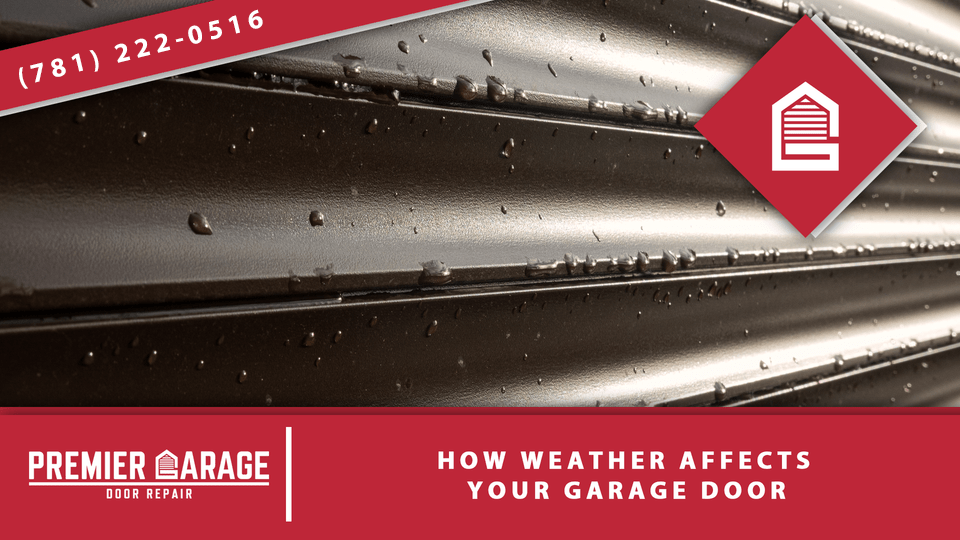
One of the most damaging weather effects is moisture—from rain, snow, or humidity. Water can seep into cracks and hinges, causing rust on metal parts and swelling in wooden doors.
Signs of garage door weather damage include:
- Corroded springs, hinges, or tracks
- Mold or mildew inside the panels
- Doors that stick, sag, or no longer close evenly
- Warping or swelling, especially in older wood doors
If you’ve noticed these symptoms, it’s time to call for garage door repair near you before the damage worsens.
Wind and Storms Can Knock Things Off Track
High winds can cause sudden impact damage, especially if your garage door isn’t properly braced or if flying debris hits the panels. Storms can also misalign tracks, bend rollers, or strain the opener if the door is repeatedly jostled or forced.
To prevent garage door rust and warping, you’ll want to inspect the door after any major weather event and look for signs of misalignment, dents, or loosened hardware.
Reinforcing your door with storm bracing is a smart move if you live in areas with frequent hurricanes or high winds.
Protecting Your Garage Door Year-Round
Fortunately, there are proactive ways to protect your door from weather damage. Here are the most effective strategies:
1. Apply Weather Seals
Installing or replacing bottom seals and side weatherstripping can prevent water and cold air from entering your garage. This also keeps out pests and debris.
2. Lubricate Moving Parts Regularly
Metal contracts in cold and expands in heat. By keeping springs, rollers, and hinges lubricated with silicone-based lubricant, you reduce friction and wear.
3. Insulate Your Door
One of the best garage door insulation tips is to add foam board or reflective insulation panels to the inside of the door. This helps maintain a stable garage temperature and improves energy efficiency.
Not sure how to insulate your garage door? Premier Garage Repair can help you choose the right materials for your door type and climate.
4. Use Weather-Resistant Materials
If your door is due for replacement, consider materials like steel or composite that are less prone to rust, warping, or swelling than traditional wood.
5. Schedule Seasonal Maintenance
Having your garage door serviced in the spring and fall helps prepare it for seasonal extremes. A technician can identify worn parts, re-balance the system, and recommend adjustments to protect against upcoming conditions.
This kind of preventative care is one reason many homeowners seek out garage door repair near you before problems turn serious.
Real Example: Winter Damage Avoided with Fall Maintenance
A homeowner in Bridgeport called us in late November after noticing their garage door was sticking and groaning. Our technician found that the rollers were stiff, the weather seal had cracked, and the opener’s force settings weren’t adjusted for cold weather.
A quick tune-up—cleaning, lubrication, seal replacement, and opener recalibration—restored the door to smooth operation. Had they waited until the deep freeze hit, the rollers might’ve cracked, and the motor could’ve failed under pressure. Regular maintenance made all the difference.
Final Thoughts
If you’ve ever wondered how weather affects your garage door—and how to protect it, the answer is clear: weather causes wear, warping, rust, and system stress that can lead to expensive repairs or early replacement. But with smart upgrades, seasonal checks, and the right materials, you can protect your investment and keep your garage running smoothly year-round.
For expert help and reliable service, call Premier Garage Repair at (781) 222-0516 or visit ma.premiergaragerepair.net. We’re here to help you weatherproof your garage door—and keep it working its best in every season.